So I have been reading the Popular Science magazine. I have always had a passion for science and career wise I even thought about going into the field. But something steered me towards literature and now I will be an English major in the fall of this year. But science has been creeping back into my life with all the movies over the past few years like: Star Trek -Into Darkness, Looper, MIB 3, RoboCop, After Earth, Oblivion and so on. These movies have seen a rise in popularity because there was quite a while without that many sci-fi movies. Maybe just a few Will Smith sy-fy movies every once in a while to tide us over. But now it is a booming genre.
What does these movies and science have to do with my writing. Well recently Popular Science made a call out to science fiction authors and asked for more books written about a futuristic world where it DOES NOT become a dystopia world. Science shouldn’t be the negative thing to bring down our civilization. It should be wars or natural disasters. That’s my opinion anyways. Readers and scientists are tired of things like Hunger Games or Divergent, portraying a world where science is a horrible, evil menace where we need to live like we are cave men again. Science should be our saving grace.
If we look at history and far science came in just fifty years then we are the most incredible people on the planet. Our country put a man on the moon. We made that happen. We explore other planets. We found the G-planet that closely resembles our world in another solar system. Come on! We can accomplish great things. Sure there are new things to destroy us like the atomic bomb or droid planes that have bombs attached to them that can be sent anywhere remotely. But with better intelligence information less mistakes can be made. There will always be human error somewhere. We are not perfect but the science can be.
My new journey will be to incorporate a science fiction theme into a middle grade book. Science will not be bad or negative. It will show children that science can be seen as a good thing. Humor will also play a part in the story. I have the outline and now I just need to get to work on writing it. The plot is a simple coming-of-age story set in the far future.
I just hope people like it as much as I do. Science rocks!
When I want to write something I don’t look at the bookshelves in the stores to see what’s popular now. I write what I want to write. This is how every artist, singer or writer in the world expresses themselves. If I wrote what is popular now and then try to get it published, by the time it sees the bookshelves, which is over a year later, those topics or genre is no longer popular.
Readers today will look up books by popularity and read reviews on Goodreads or Amazon. This little tool of reading reviews has saved me many times from buying the wrong product. How ingenious it is to have a place where we can read what other people thought of the book or product before we decide to read or buy.
But there is another side where readers don’t trust complete strangers on the internet to give them advice to read a book. So what do they do? They ask their friends and family members. They ask librarians or teachers. They research a book’s quality by doing a lot of leg work. Sounds tiring huh?
It starts small…
Then grows a little more…
till finally your eyes are screaming !!!!
The only thing left is to trust the reviews online. Surely, over a hundred people can’t be wrong about a book, right?
So write what you want to write. Sooner or later they will find your book, and either love it or hate it, and let everyone else in the world know about it.
Read more at : http://libraries.pewinternet.org/2013/03/18/what-should-i-read-next/
If you are unpublished. Looking into different magazines that try to help new writers become noticed is Glimmer Train Press and The New Yorker magazine. I have a subscription to The New Yorker magazine and the stories published are slick. Meaning they are contemporary writings. There are realism stories along with the contemporary. Throughout the magazine you can read about the major events happening around NYC. It covers theater productions, musical productions and art exhibits.
I have submitted a couple of short stories to Glimmer Train Press. They have many contests throughout the year for unpublished writers to enter. There are several categories to choose from, and different deadlines. For example the short-short story contest deadline is April 30. Their website http://www.glimmertrain.com/ provides information on costs for entering and the guidelines for your writing submission.
Besides these two magazines there are many more writing contests to be found just using Google. So good luck!
Why isn’t every traditional publisher out there taking notice of all the great writers? There was a boom of color writers during the Harlem Renaissance (1919-1940). Later on colored writers did not stop and good thing or we wouldn’t have Toni Morrison, or in the Latin community we wouldn’t have Gabriel Garcia Marquez, or Native Americans like Leslie Marmon Silko and lastly there wouldn’t be any Mideast writers like Khaled Hosseini. I have read their great works and highly recommend people to step outside of the white bubble the publishing companies push in front of us. We are a society of mixed cultures. NO longer a white dominant society. Writers of every color should be examined by their works and not their skin color. Wake up! See all the beautiful colors in the world. Don’t turn a blind eye to a name you don’t recognize. Or you will be missing out on some great stories.
How does a literary agent define their “ideal client”? The question is extremely important because it’s one that factors into an agent’s mindset before and after they sign you.
If an agent has read your complete novel or book proposal and wants to sign you, the next step is almost always to arrange a telephone call where the two of you get to know one another. You ask the questions you want to ask about her and her style; she does the same regarding you and your style. During the phone conversation, the agent is trying to gauge whether you’re compatible enough with her to be signed as a new author in her stable. She’s already sizing up whether you can be a good, long-term client, or close to it.
Then after you sign with the agent, the two of you begin a long process of working…
If you haven’t read “The Complete Idiot’s Guide to Publishing Children’s Books” then stop reading now. I read it and somewhat loved it. The no-nonsense way of telling writers who they can query and who would give a flip is awesome. I always thought that companies like Scholastic would be open to new authors. Well they are not. Even though they might look at your work, they are really closed to new work. Theses companies want to publish only the authors they have had for years. The same authors and the same series. It is their bread and butter. Sure J.K. Rowling was a new name over ten years ago and sure Scholastic picked her books up. But does that mean you have the next “Harry Potter” series? I am pretty sure it’s a “no”.
So the book breaks down what is trade, mass market and independent publishing. It also breaks down what an agent does and doesn’t do. Some of the things is pretty standard stuff. But reading it I thought I would find a golden nugget instead I found flakes of gold through out it. This is a good thing. After reading this book you will see that you do have to have connections and everyone in the publishing industry are human and want to be treated as such. Common sense, right? Well it should be, but for some writers I know, they tend to think they should do something to stand out in the slush pile. Big mistakes are made and bridges burnt. Instead try to learn who is working where and see how great the company is doing. Is the company getting bought out or the agency closing down? Is an agent retiring or focusing on their own career? I looked up an agent once. I Googled him, facebooked him, and even read his Tweets. He sounded really good and seemed to be the right fit for me and my work. Well what I didn’t know until after I queried him was that he just wrote a book. He asked for my manuscript but was more interested in how his new baby was doing in the market. Researching agents is tricky because sometimes they are focused on things you don’t know about until they make an announcement.
Publisher’s doors are closed and special invitations are needed to attend the party. Trying to get in the “in-crowd” is about as difficult as pulling your own wisdom teeth out. So for all the pain, worry, work, and research you do on your own sometimes it might be best to read a book, like the one I am suggesting above, to give you a clue about what to do next. This book tells you to join a writing group (I’ve done that), to find writing critique groups (done that too) and to read (done) and write (done) until you have perfected your craft before you query (sigh*).
Well read the book and then tell me what you learned from it. I’d love to see new advice.
A great adventure after another. Huck surprises you with his willingness of lying to protect a friend. The bonds of friendship as surpassed with Huck and Jim. In the end this classic novel is a part of history and culture that defines us as a country and of the type of people we are.
I know I have covered procrastinating before. (See “Procrastinating” post: 2011/09/08.) And I even went so far as to think that I am the only writer who does procrastinate. But now I find out that this phenomenon is not solely my problem but many other writers as well. Attending countless writers conferences and hearing agents and editors all say the same thing about the problems of writers I just did not connect the dots till now. I read an article posted by friend and it says that procrastinating is something all writers face. This is should not be a new concept but let’s just say I was a little slow to finally grasp the connection until I read this. The article was spot on with all the problems I have and I am so glad to see I am not alone. So for all I would like to say…..
“Hello, my name is Jessica. I am a procrastinator.”
Expressive and Emotional word content... poetic justice... my thoughts are perceptive, occasionally subjective but always dimensional. My career lies in psychology and my mind lies in philosophy. To question and ponder is to reflect. I am both reflective and directive. I never walk with caution as our steps need their footprints. I love this journey we call life.

 that can be sent anywhere remotely. But with better intelligence information less mistakes can be made. There will always be human error somewhere. We are not perfect but the science can be.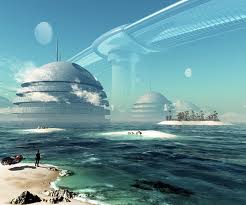




 writersobsession
 Writing Tips for Beginners