Feeds:
Posts
Comments

Archive for the ‘Author’ Category

Connect with Readers: Knowing who you’re writing for helps create stories that resonate emotionally. The story becomes more relateable.

Guides Your Writing: It influences your tone, language, themes, and even the structure of your story. The story has a more complete style and does not feel like a first draft.

Improves Marketability: Agents and publishers are more likely to pick up stories tailored to a clear audience. They don’t want to see a MG author writing picture book length stories. They want 80k+ word manuscripts if you write for MG.

Steps to Identify your Audience

  1. Define Your Genre
    • Ask yourself: Is your book a romance, fantasy, thriller, or another genre?
    • Look at bestsellers in your genre and analyze their audience demographics.
  2. Create a Reader Persona
    • Imagine your ideal reader: their age, gender, interests, and lifestyles.
    • For instance, a YA fantasy reader might be a 15-year-old who loves magic and adventure.
  3. Research Reader Preferences
    • Join online communities (like Goodreads, Facebook groups, or Reddit) where readers discuss books. *Hint: I am a part of all of these communities and find a lot of help there.
    • Take note of what readers love and dislike about books in your genre.
  4. Analyze Successful Books
    • Read books similar to yours and study the reviews.
    • Identify recurring praises and criticisms.
  5. Understand Trends, Not Fads
    • Trends are long-term reader preferences (e.g., strong female leads).
    • Fads are short lived (e.g., vampire romances at their peak). Aim for timeless appeal with a sprinkle of trend awareness.

Tools for Audience Insights

  • Social Media Polls: Ask your followers what they like to read.
  • Beta Readers: Gather feedback from readers who fit your target audience.
  • Surveys and Questionaires: Use tools like Google Forms to ask potential readers what they want in a book.

Balancing Authenticity and Audience Needs

While understanding your audience is essential, don’t lose your voice. Write what you’re passionate about and find a way to align your story with what your audience craves. Authenticity shines through and helps your work stand out.

Happy Reading! And good luck in the New Year!

Read Full Post »

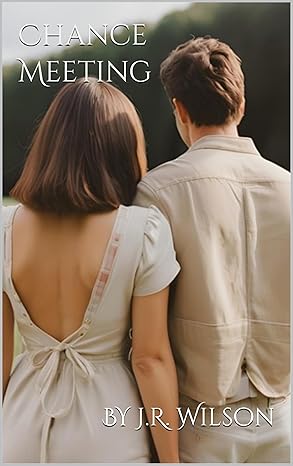
The Kindle Vella library will be closing soon. Maybe because it did not do so well on Amazon or some other factors. But either way, I wrote a short story that I had to download and transition over to a Kindle eBook. The download was easy enough and when the zipped file is opened all the documents along with the cover photo is there. The next part was “creating” it on the Kindle Direct Publishing page. This did not take long and soon I had my eBook published and ready to go live.

If you want a short story to read through the holidays about love and second chances then give my book a shot.

https://a.co/d/36B2Sl9

Thanks!

Read Full Post »

I recently wrote a short novel to enter the KDP vella contest. For anyone interested in checking out this story here is the link: https://www.amazon.com/kindle-vella/story/B0D96X52Y7

I would love to have some followers to like and follow this story. Thank you!

Read Full Post »

As of March 2024, I gathered a list from Lime Light Publishing’s blog, and searched each publisher to see which are still open for unsolicited submissions. Out of the 15 there are still a few that are open. ABDO is not accepting submissions along with Black and White Publishing, Tor/Forge, Quirk, and Seven Stories. Most of those not accepting want represented authors. What you do with this information is up to you. Good Luck, everyone!

1. DAW1
DAW is an imprint of Penguin books. They publish science fiction and fantasy books. DAW has published authors such as Marion Zimmer Bradley and Roger Zelazny. DAW has published many bestselling books, including Hugo award winning books. 

2. Persea Books
A respected publisher of fiction, non-fiction, poetry, and literary young adults novel. The work they publish receives good distribution, particularly in academic circles. 

3. Source Books
A large independent publisher based out of Illinois, they also have offices in Connecticut and New York. They are open to unsolicited submissions of a wide range, including non-fiction manuscripts and romance manuscripts.

4. Turner Books
Turner publishes books in a wide range of categories and formats—fiction and non-fiction. They publish mainly in print but have electronic options as well. They are a major independent publishing house that has a number of imprints. 

5. ABDO Books
ABDO Books is a publisher that focuses exclusively on educational books for children between the ages of four and twelve. They sell a lot of books to schools and appear to be rather good at niche marketing. 

6. Black & White Publishing
Black & White Publishing was founded in 1995 and is now one of the largest Scottish publishers. They currently have over 200 books in print. They have good distributor and are starting to break into the eBook publishing world. They publish general non-fiction, biography, sport, and humor, as well as selected fiction, young adult, and children’s books. 

7. Tor/Forge
Tor/Forge publishes science fiction and fantasy books. Run by Tom Doherty Associates, LLC, Tor/Forge is an imprint of Macmillan, one of the big five publishers. Tor is one of the most established science fiction publishers and they have won the Locus Award for best SF publisher 26 years in a row. They offer advances. 

8. Lyrical Press
Lyrical Press is an electronic only imprint of Kensington, a large independent publisher. Kensington and Lyrical both publish mainstream novels and seem to put a fair amount of pressure on the author to promote their books. They publish a large number of books per year. 

9. The Totally Entwined Group
The Totally Entwined Group is an eBook and print publisher that was successful in its own right, before being purchased by the Bonnier Publishing group. There have been some shifts in focus since Bonnier purchased it in 2015, but the group still has a good reputation and its focus is still on its two flagship established imprints – Pride and Totally Bound. 

10. Quirk Books
This Philadelphia based press publishes 25 books a year in a whole range of genres, including children’s books, nonfiction, and science fiction. Unlike most publishers that tackle a large range of topics, Quirk books has a clear marketing plan for all of their books. To a certain degree their books have a cohesive feel, because they all are quirky.

11. Baen
Baen is one of the best known publishers of Science Fiction and Fantasy books. They are one of the few established publishers that will accept full length manuscripts from authors who do not have an agent. They do not need to see any history of publication either. As long as your book is Science Fiction or Fantasy they will consider publishing it. 

12. Chicago Review Press
Chicago Review Press was founded over 40 years ago. They are an established independent publisher of literary fiction, non-fiction and memoir. They also publish books for children (but not picture books). They were founded by Curt Matthews and his wife, Linda Matthews. Curt was the former editor of the literary journal the Chicago Review. 

13. Hotkey Books
Hotkey Books is an imprint of Bonnier Publishing which is part of the much larger international Bonnier AB, a large media group. They publish Children’s books and Young Adult fiction. 

14. Seven Stories Press
They focus on producing books that have a social conscience. They have published some big name authors and bestselling books. They publish literary fiction and non-fiction. 

15. Chronicle Books
Chronicle is an established and respected publisher of children’s books, cookbooks, gift books, anthologies, and various other books, most containing a strong visual element. They are based out of San Francisco. Their books receive a lot of positive attention and acclaim.

  1. This link will take you to Astra Publishing House because they acquired DAW books in 2022. ↩︎

https://www.limelightpublishing.com/blogs/news/15-major-book-publishers-always-open-to-submissions

Read Full Post »

Let’s be honest and admit we all need a little (or a lot in my case) help with our writing. Whether it is in the form of line by line editing, or using spellchecker, or if we are needing a new perspective from a critical eye. It’s okay to admit it.

In the past, authors had no spellchecker, no editing, and sometimes no one to help them with a plot. Writers were on another level. There was Hemingway, Frost, Twain, Dickens, and Poe. And before them, the most copied author, Shakespeare. They all have a different writing style, prose, or language used. But they are all famous for having some of the best stories.

Today, we have many writers. In fact, there are so many authors that readers have a hard time keeping up with all the books being published every year.

Authors today have the technology to take their writing to “ready to print” phase with minimal proofreading by editors. With the new technology of AI writing apps some writers will not have to do much. Will this kind of work still be considered authentic? Will it sound plagiarized? Will readers find the voice of the writing to be nonhuman? Or will publishers deny writing using AI?

Some of the more popular AI apps I found in the Google playstore was:

Most of these apps have downloads in the 100 thousands. The more readily and user-friendly they are, the more downloads. What will the next generation of writers be like? Will schools allow it over time? How will any reader know if the words were made up by a human or generated by AI?

Share your opinions about these apps. Will authors fade away? Will writing evolve to a level we have never seen before? Change is not always a bad thing unless we lose our humanity.

Keep writing!😊

Read Full Post »

The Ultimate Guide on How to Improve Your Writing Through Reading:

How is your reading and writing going?

Choosing the Right Books to Read to Enhance Writing Skills:

Some of the books an author should be reading is the genre they are writing. But it can become somewhat tiresome. I enjoy many different genres to read and feel that learning should be ever ongoing. I will read fiction and nonfiction. Adult and children’s books. I will also read educational books which teach writing skills. All of these books are good and help a writer improve their skills.

Developing Your Own System of Taking Notes While Reading to Help with Writing Projects:

One aspect to keep in mind while you read is to take notes. These notes do not need to be lengthy but should include where you found the advice or writing technique from. I have made the mistake of taking notes from some of the books I have read and forgot to write down where I saw the writing technique. Sometimes keeping track of where you found your information is helpful when looking back at the notes. Note-taking is a great way to organize your thoughts on what you find helpful for your writing. Logging what you read and when is also helpful because this allows you to see what you enjoyed about the book also.

Start Using the Power of Reading Today To Take Your Writing to the Next level:

Many authors who I have spoken to will either stay away from reading the genre they read in or they will delve into it and take notes. But reading anything helps keep an author’s mind on sentence structure, spelling, tone, and plot. These are needed to create a book worth reading. Happy reading!

Read Full Post »

I have noticed a theme here lately in the books that win the Newberry Medal award or other awards. It seems to me that they all have a sad tone or dark mood. Here are some books I have read that have been given awards.

“Wolf Hollow” by Lauren Wolk, was such a sad story that I had a hard time reading this to my school children. It was sad and depressing and did not give you any hope in humanity. Yes, there are life lessons in it. Yes, it is more realistic with the ending. But how are these books judged? Do they get an award because of how much they make you feel or cry?

“Hello Universe” by Erin Entrada Kelly, is another story that leaves you feeling a little sad at the ending. Yes, again there were life lessons. It had a better ending than the other books but you feel the innocence is gone from these children.

“Pax” by Sara Pennypacker, is a story that you just cannot stop reading even though you have guessed the ending before the last three chapters. Another sad story of loss and a young boy having to grow up and face the reality of war. It breaks your heart.

Now, these are only the books I have read in the last year that have gotten rave reviews and won awards. I have read other books that were good and uplifting.   But there is a universe of sad books that have received awards like, “Old Yeller”, “Shilo”, “Holes”, “Beyond the Bright Sea” (Another book by Lauren Wolk. You can see her pattern of style.) and “Inside Out and Back Again”.  And they all have a sad tone to them.

So what makes these books so loved by critics or literary scholars? The harsh reality in them? The fact they bring grown men to tears? Who knows?

I think we need more good books for children where they can feel happy about the ending. We need beautiful books that show that the world is not all ugly. We need books that children can escape into for a while. Children are already seeing the ugly side of the world it is time we give them books that encourage them to see the bright side of things now.

images (21)

Read Full Post »

Do you ever feel you are a seasonal writer?istockphoto-692299112-612x612

Okay not everyone can be like Mary Faulkner and keep pumping out books. Some of us (especially me) like to write when the season is right. At the beginning of the year I feel excited to start fresh to tackle my goals of writing, then somewhere during the year life happens and my writing goals get forgotten.

Some of the time I hit a slump in writing that it looks like I gave up altogether but I am always thinking about it in the back of my mind. When I read a good book, I think “Oh that was some good writing” which makes me think about my own writing. Then I feel depressed I have not written in a while and the vicious circle continues.

So how do you break the habit of hibernation? I recently read a great article about 3 steps to help writers become more successful in accomplishing goals. We should all try these steps. The first is to not wait for inspiration.  I know that seems to be my problem right now.

The second is to not give up because of someone criticizing your work. Everyone will have something to say about everything you do. Try not to get offended and keep on writing.

The third is to set up small wins. We all have high expectations of ourselves and feel we are not meeting them. Ultimately, this can hurt your motivation for writing. Make smaller goals to reach each day and celebrate when you accomplish them.

Read more from this article: 3 Surefire Ways to Write More Consistently

Start writing today!

Read Full Post »

Taking a break in the summer from writing does not mean to stop reading.  I have challenged myself to read more books this summer.  If you want to challenge yourself and need to keep track too, then try the challenge on Goodreads. https://www.goodreads.com/

This helps me to also keep track of my reviews of the books.  Sometimes I can read so many books that after a while I lose what I read. Keeping my impressions by writing reviews reminds me of the book. How do you keep track of your reading?

I recently read an article about the summer slide for kids. The data is disheartening for children book authors. Here is an excerpt from the article on Summer Reading 2019:

“According to findings from the Scholastic Kids & Family Reading Report™: 7th Edition, there is a rising trend of kids ages 6–17 reading zero books over the summer: 15% in 2016 vs. 20% in 2018. Among 9–11-year-olds, this percentage has doubled (7% to 14%), and among teens ages 15–17 it has increased by ten points (22% to 32%). To help turn this trend around, the report reveals that if parents are aware of the summer slide, their children are less likely to read zero books (16% vs.25%). Yet, 47% of parents with school-age children are not aware of the summer slide and this percentage increases sharply to 63% among families with household incomes under $35,000. “https://www.cbcbooks.org/2019/05/08/summer-reading-in-2019-is-all-about-kids-empowerment-with-scholastic-summer-read-a-palooza/ 

Scholastic and United Way Worldwide are donating high- quality books to communities providing children access to them through libraries and book stores.  Teachers and parents are also trying to reverse this trend. I do not stop reading so, of course, I do not let my kids stop either.

What are some effective ways that help children (and you) to keep reading during summer break? What do you feel is the benefits for an author to read in their genre or outside of it?

Read Full Post »

There are times when every author must wait for a response from an agent or publisher about a query.  We sit on pins and needles.  Weeks go by and even months on end. Then we might get a form rejection letter. That is not what I received recently. I have gotten glowing remarks in rejection letters and even well-wishers for my book to find a home, but never a slap. I mean a cold, Doc Martin-crass-attitude rejection letter. If you don’t know who Doc Martin is well he is a Doctor in Portwenn, who is very blunt and has no social skills whatsoever. I love this show!

510ieY9cM8L

So I decided because this agent went to the trouble of telling me very bluntly why she didn’t like my manuscript and why she “could not read any further”, I thought that I might as well pay attention to her suggestions and fix the problems. She said I used too many adverbs, repeated names a lot and had no voice. I went back and fixed the grammar problems. I edited the manuscript to the point of taking out a good majority of the beginning and now I hope it sounds okay.  The problem I have left is the voice.

With all the negative comments this made me wonder if the manuscript is just not good enough to be published. I mean is it not the editors who decide that a manuscript is worth editing or fixing? They decide whether a story is worth the work. Are they really expecting a manuscript to be flawless? I am not a perfect writer and I really do not know anyone who is. I just wonder if this agent is right and my writing has no voice. Could I be that boring? Just some insecure thoughts here after my hundredth rejection letter. But who’s counting, right? Keep your chin up. Things can only get better from here!

frustrated-writer-give-up-canstockphoto15934705

Read Full Post »

Older Posts »

Red's Art Journal

A place where ideas flow freely.

Corey Truax

Husband | Father | Veteran | Author

Grant Michael Gardner

I write books, I post thoughts, and I foster trustworthy creators.

pdpabst

A window to my brain. I'm a writer and editor..

Osteogenesis Imperfecta- Cushioned In Love

Expressive and Emotional word content... poetic justice... my thoughts are perceptive, occasionally subjective but always dimensional. My career lies in psychology and my mind lies in philosophy. To question and ponder is to reflect. I am both reflective and directive. I never walk with caution as our steps need their footprints. I love this journey we call life.

Damyanti Biswas

For lovers of reading, crime writing, crime fiction

S.A. Barton

Seriously Eclectic

Ambitious Procrastinator

No One Here But a Writer Who Gets Up and Try

Creating A Home For The Heart

Finding Joy in the Simple Moments of Life

Beautiful Life with Cancer

Discovering the Gift

Gina

works the diner all day

A WORRIED STUDENT

Take Us Seriously!

Seth Adam Smith

Write a good story. Live a good story.